
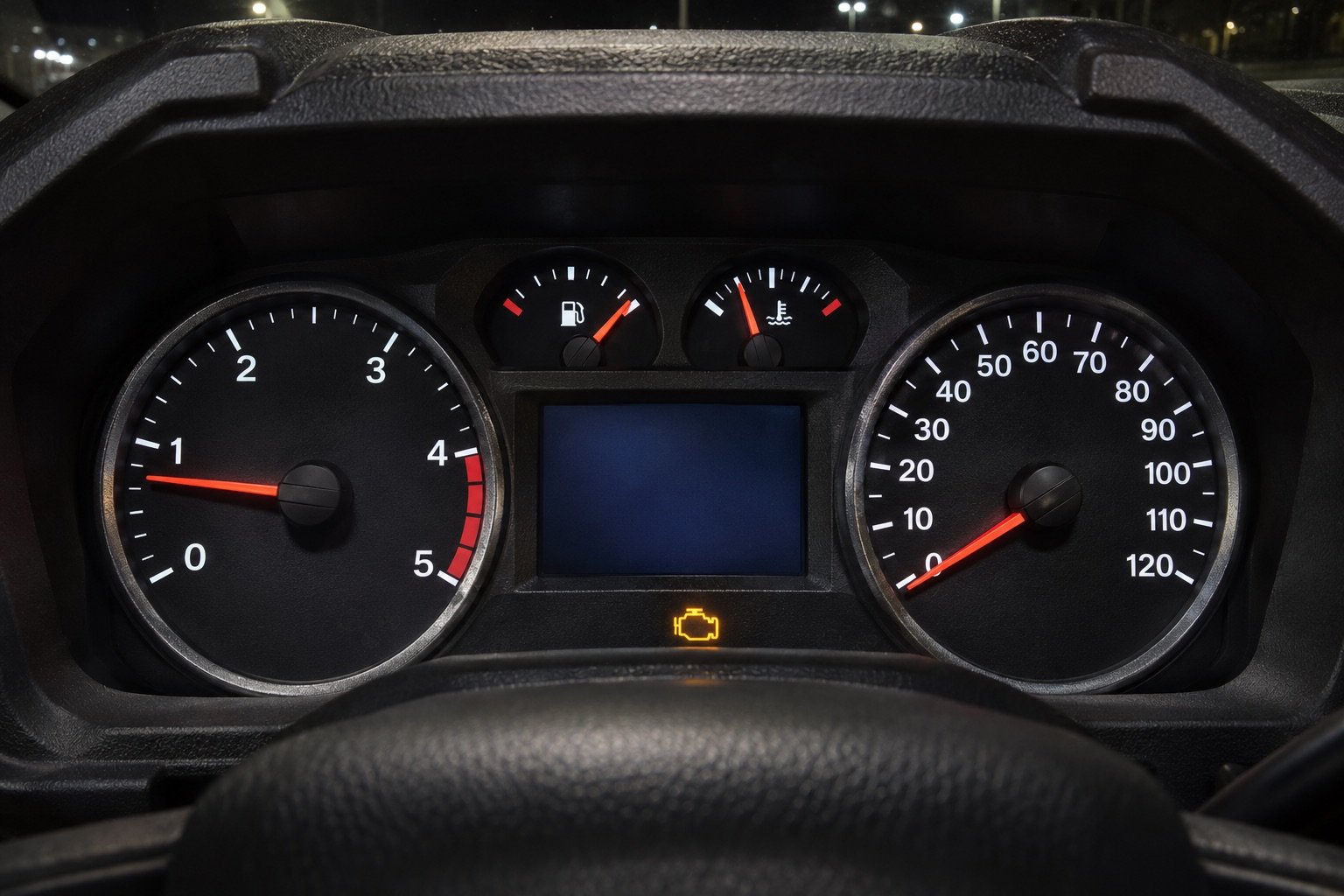
The question
“My check engine light came on, stayed on for a couple of days, and then went off by itself. Is the problem fixed, or should I still get it checked?”
An example question from a diesel truck owner
The short answer
The light going off does not mean the problem is fixed. It usually means the computer stopped seeing the fault for a while, and the code is often still stored. Have the codes read, including pending and permanent codes. And if the light ever flashes, slow down, stop towing or hauling heavy, and get it checked as soon as you can.
The light went out, but you still need to decide whether the truck needs attention. Here is what is going on, the diesel causes I would look at first, and what I would do next.
What the light is telling you
Your truck’s computers watch the sensors and systems that affect emissions and how the engine runs. When one sees something outside the normal range, it stores a trouble code and turns on the check engine light.
Many faults are only tested under certain conditions, like a cold start, a long steady drive, or a DPF cleaning. If the system runs the test again over a few drive cycles and everything looks normal, it can turn the light off by itself. The code usually stays in memory for a while, as a record of what happened.
A drive cycle is not just starting the truck and shutting it off. It is a drive long enough, and varied enough, for the computer to run its tests: a cold start, some steady driving, and time at operating temperature. That is why a light can stay on through a week of short trips and then go out after a few longer drives.
Steady light versus flashing light
- A steady light means a fault was found. Get the codes read soon. Before you decide how far to drive, note any other warning lights or messages, and any change in how the truck runs.
- A flashing light means a serious fault. Slow down, stop towing or hauling heavy, and get it checked as soon as you can. Your owner’s manual says what it means on your truck.
On a diesel, also take DEF warnings and a water-in-fuel message seriously, whether or not the check engine light is on. Your owner’s manual explains what each warning light and message means for your truck.
Common diesel causes of a light that comes and goes
1.NOx sensors
A diesel with modern emissions equipment uses NOx sensors in the exhaust to check that the system is working. A sensor that is starting to fail can set a code, pass the next test, then fail again.
2.DEF quality or the DEF system
Old, contaminated or diluted DEF can set codes, and so can a problem in the DEF system itself. Watch for DEF messages on the dash along with the check engine light. Ignored DEF warnings end in a speed limit. Your owner’s manual explains the warning steps.
3.The DPF pressure sensor
The truck measures exhaust pressure across the diesel particulate filter to decide when it needs to clean itself. A sensor or a cracked sensor hose can give bad readings that come and go, especially with heat and vibration.
4.Glow plugs
Glow plugs help a diesel start in the cold. A weak glow plug or its circuit can set a code on cold mornings and then look fine all afternoon.
5.Wiring and connectors
A loose connector or a wire that rubs on something can make a fault come and go with bumps, heat and rain. Exhaust sensors live in a hot, dirty place, so their wiring takes a beating.
What about the fuel cap?
The 2017 and 2026 Super Duty manuals show the diesel owner how to remove and refit the fuel filler cap. If the truck shows a “Check Fuel Cap” message, take the cap off, check the seal, and put it back on correctly. Do not assume a check engine light is the cap, though. On a diesel, the causes above are more likely to be your answer.
Pro tip
Write down when the light came on: cold or warm, towing or empty, highway or town, rain or dry. That note helps a technician find the fault.
What I would do
1.Read every module, not just the engine
A basic reader may show only current codes. Ask for pending and permanent codes too, and have the other modules scanned. Use a scan tool that can do that, or have a shop do it.
2.Do not just clear it and forget it
Clearing the code turns the light off, but it also wipes information a technician could use. If you clear it, write the code down first. Clearing codes also resets the emissions readiness checks, so the truck can fail a state inspection until they run again.
3.Watch for other signs
Rough running, loss of power, a strong fuel smell, a hot smell, or a temperature gauge climbing are all reasons to stop and get help instead of waiting.
4.Get it diagnosed if it comes back
A light that comes back is the truck telling you the problem is real. Ask the shop to explain what they found and why they recommend a repair, and whether there are any recalls or service bulletins for your truck and your code.
When it is time to stop driving
Pull over safely and call for help if the engine shakes badly, if the temperature gauge goes into the red, if the oil pressure warning comes on, or if you smell something burning. Those are not wait-and-see problems.
The bottom line
A check engine light that goes off by itself still needs a look. On a diesel, read every module, note when it happens, and never ignore a flashing light. When in doubt, a qualified diesel technician with a proper scan tool is the right next step.