The short answer
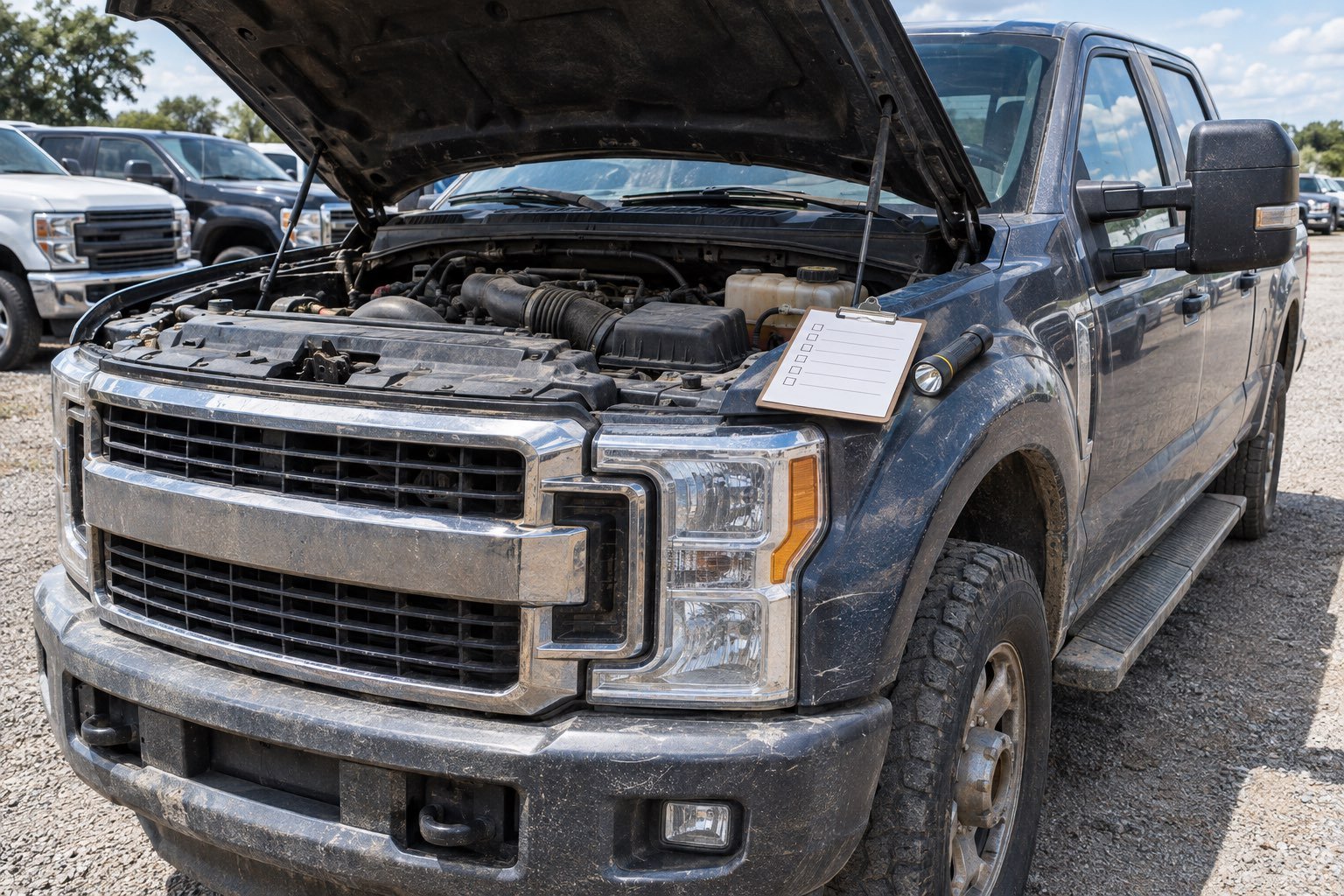
Look under it before you look at it. Check for leaks, frame and body damage, start it cold, read the service records, make sure the emissions equipment is all there, and take a real test drive. Then pay a trusted shop for a pre-purchase inspection before you sign anything.
Before you agree on a price, check the truck underneath, start it cold and read the service records. Problems that are easy to spot in a driveway are much cheaper to find before you sign than after.
This is the checklist I would use myself, in the order I would use it. Bring a flashlight, a rag, and a friend if you can. And plan to walk away if the seller rushes you.
1.Look underneath first
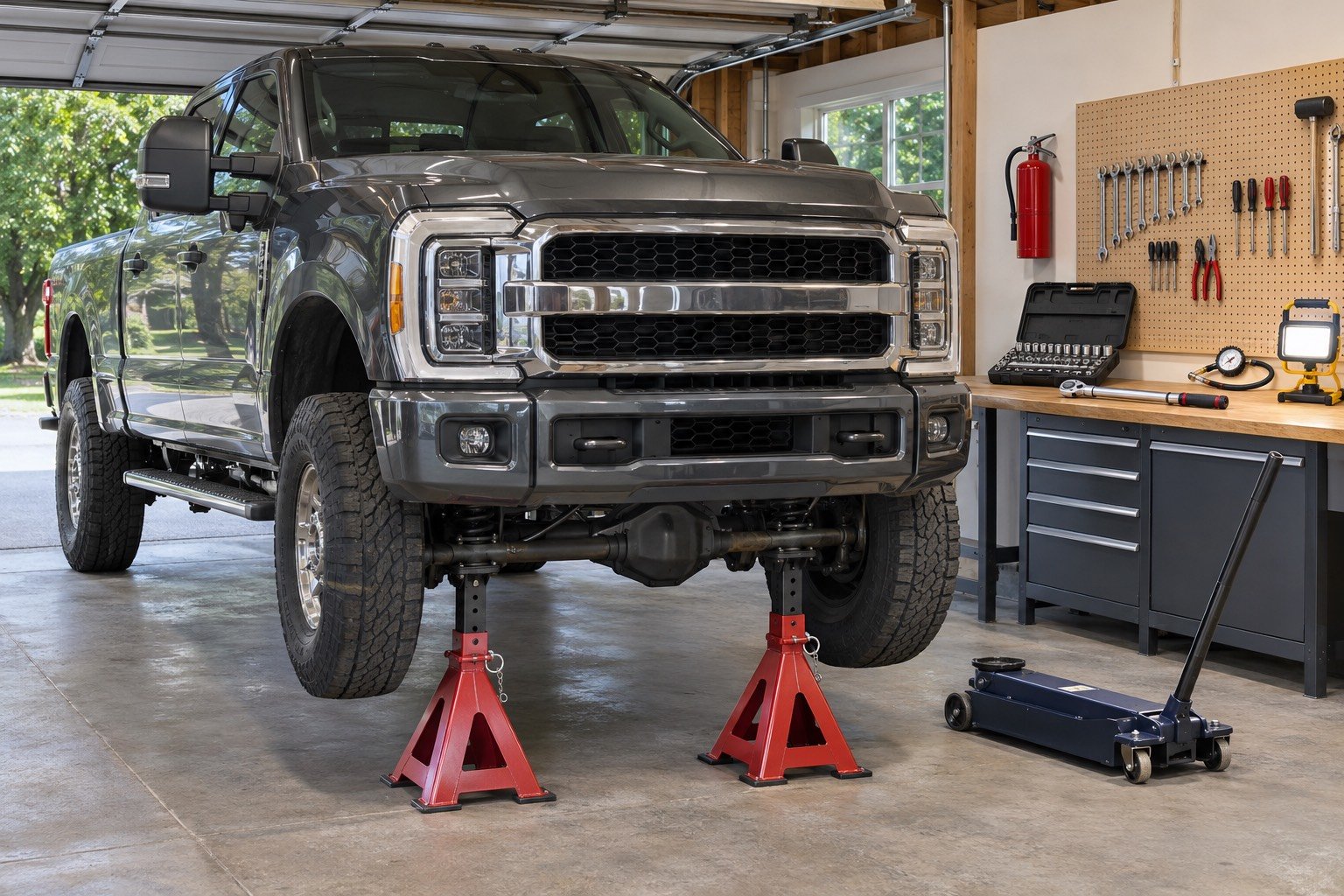
Get low and look at the ground under the truck, then at the engine, transmission, transfer case and axles. Fresh drips, wet spots and caked-on grime are all worth a question. A little old dirt is normal. A freshly washed engine bay on a work truck is worth a question too, though it is not proof of anything by itself.
Check behind the wheels for brake fluid or gear oil, and look at the shocks for oil running down the body.
2.The frame
Surface rust on a steel truck frame is common, especially where roads are salted. What you want to avoid is rust that flakes in layers, holes, or soft spots. Tap suspicious areas with the handle of a screwdriver. Look closely around the spring mounts, the crossmembers and the hitch area.
Also look for welds, kinks or fresh paint on the frame. Those can mean a past repair or an accident that never showed up on a report.
3.The body
The cab corners, rocker panels and bed supports are body, not frame, and they deserve their own look.
On a 2017 or newer Super Duty, the body is aluminum on a steel frame. Aluminum does not rust like steel. Corrosion tends to show up as bubbling paint or white, chalky spots, often around edges and where steel parts touch the aluminum. On older trucks, look for classic rust in the same places.
Pro tip
Wear around the hitch is a reason to ask what the truck towed and how often. Marks alone do not tell you its towing history.
4.Start it cold
Ask the seller not to start the truck before you arrive, and put your hand on the hood to check. A cold start shows you things a warm engine hides: hard starting, rough idle, smoke, and ticks or knocks that fade once the oil is warm.
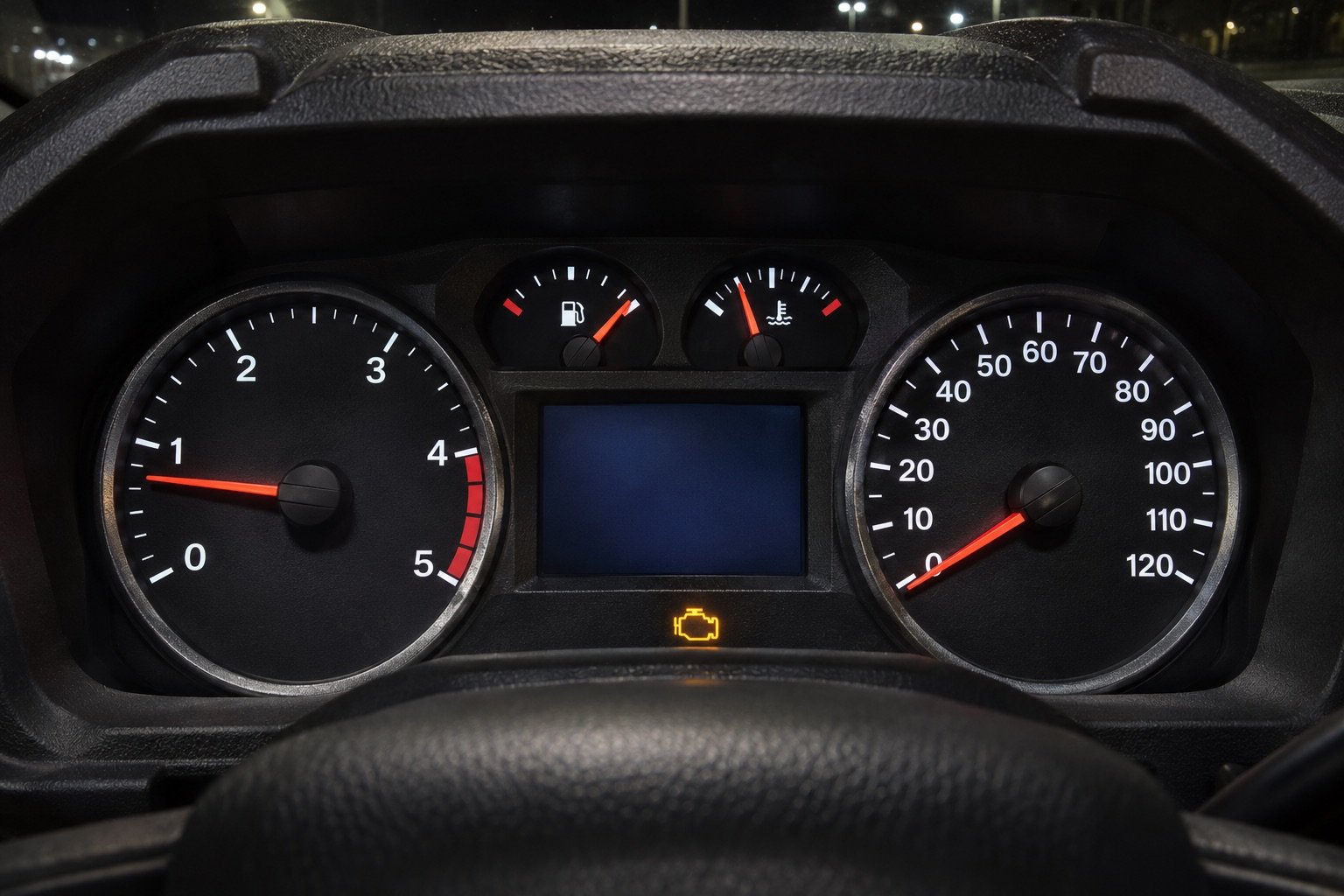
Check that all the warning lights on the dash come on at start and then go out. On a diesel in cold weather, ask whether the block heater works and when the truck was last plugged in.
5.Check the fluids
Pull the oil dipstick. Look at the color and smell, and check for a milky look, which can mean coolant in the oil. Look at the coolant level and color in the reservoir with the engine cold. If the transmission has a dipstick, check that fluid as well. It should not smell burnt.
6.Read the paperwork
Ask for service records. A stack of receipts or a dealer printout is a very good sign. No records at all does not mean the truck is bad, but it means you are trusting your inspection more.
Run a vehicle history report, and check for open recalls with the VIN on the manufacturer’s site or the NHTSA site. On a Ford, ask a Ford dealer whether they can see service history for that VIN. Make sure the VIN on the title matches the VIN on the dash and the door jamb.
7.Take a real test drive
Drive it on the kinds of roads you will really drive. Include a highway on-ramp, some stop and go, and a few bumps.
- Does it shift smoothly, with no slipping or hard bangs?
- Does it track straight, and does the steering wheel sit centered?
- Do the brakes stop straight with no pulsing or grinding?
- On a 4×4, does four-wheel drive engage the way the owner’s manual describes? Test it briefly, at low speed and going straight, on gravel or another loose surface. Do not drive in four-wheel drive on dry pavement; it can damage the driveline.
After the drive, look underneath again for anything that started dripping. Then sit in the truck with the engine running and the doors closed. Smell for coolant, fuel or burning oil, and look at the wear on the seats, pedals and steering wheel. Heavy wear on a truck with low miles on the dash is worth a careful question.
8.Extra checks on a diesel
Ask when the fuel filters were last changed, and look for the receipts.
Then check that the emissions equipment is all there and working. Under federal law, the Clean Air Act forbids anyone to knowingly remove or render inoperative an emissions control device, and to make, sell or install defeat devices. That applies in every state. A Ford dealer can refuse to work on the engine or emissions system of a deleted truck, warranty claims can be denied, and putting the equipment back can be expensive. Signs to look for:
- A tuner or other device plugged into the OBD port under the dash.
- A missing DEF tank or DEF fill, or a DEF gauge that never moves.
- Black smoke under hard acceleration. A diesel with a working DPF should not blow black smoke.
- A straight pipe where the exhaust treatment parts should be.
A truck with no plug-in tuner can still be tuned. A tune can live in the engine computer itself. A Ford dealer can read the software version for you.
Also compare the engine hours with the miles. A truck that idled for long hours or worked a job site can have low miles and a lot of engine hours. And check both coolant reservoirs, not just the one you see first.
On the test drive, listen for a hiss or a whistle that gets louder than normal under load, along with weak power. Those can mean a boost or exhaust leak. Check for new warning lights after the drive.
9.Questions to ask the seller
- Why are you selling it?
- What did you use it for, and did it tow? How heavy?
- Who did the maintenance, and do you have the records?
- Has it been in an accident or had paint work?
- Is there anything that does not work right now?
Then check each answer against the records and the inspection. An answer you can confirm is worth more than an answer that sounds good.
10.Pay for an inspection
Even if everything looks good, take the truck to a shop you trust for a pre-purchase inspection. A technician with a lift and a scan tool will see things you cannot see in a driveway. A seller who will not allow an inspection is giving you an answer.
Before you decide
Write down three lists: faults the inspection found, records still missing, and questions the seller has not answered. If the lists are short and the price reflects them, you may have found your truck. If they are long, there will be another truck.